Debit Card vs. Credit Card: Which One Should Young Adults Use?
For young adults, choosing between a debit card and a credit card is a major decision. In modern consumer finance, this choice goes far beyond simply “spending your own money” versus “borrowing tomorrow’s money.” It is deeply tied to building credit history, ensuring financial security, and managing spending psychology.
Here is a breakdown of their pros, cons, and the “smart rules of the game.”
1. Credit Cards (The Credit Builder)
For young adults, starting to use a credit card early and responsibly is highly recommended.
Pros:
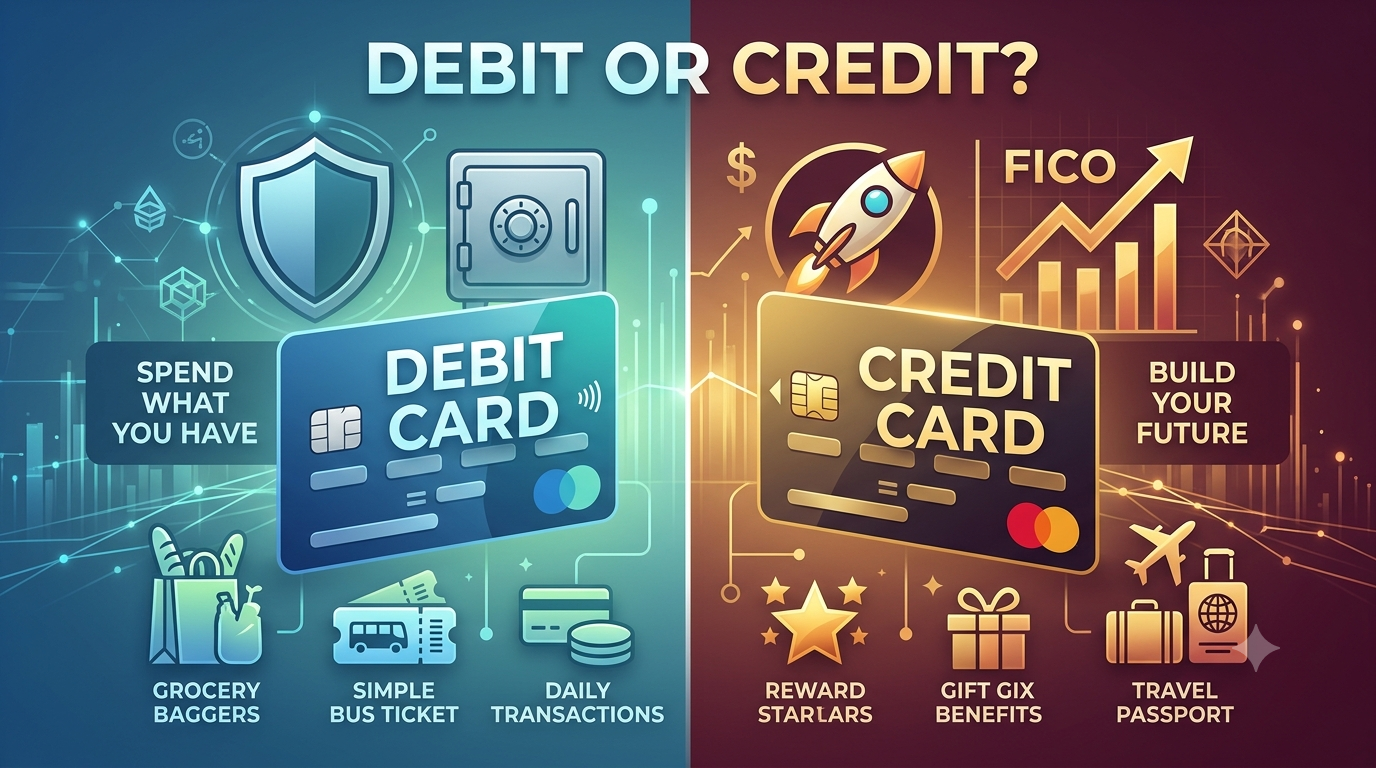
- Building Your Credit Score (FICO) 🚀: This is the most critical factor. Your credit score determines your interest rates and approval odds for future milestones like renting an apartment, buying a car, or purchasing a home. Debit cards do absolutely nothing for your credit history, whereas a credit card will steadily boost your score as long as you pay your balance in full every month.
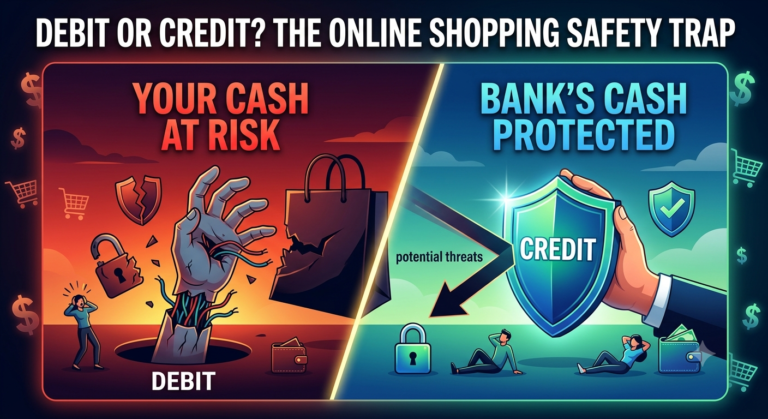
- Superior Fraud Protection 🛡️: When you swipe a credit card, you are spending the bank’s money. If your card is compromised or stolen, you can simply dispute the charges. You won’t have to pay those fraudulent charges while the bank investigates, and your personal bank account remains completely untouched.
- Rewards & Cash Back 💰: Many credit cards offer 1% to 5% cash back, travel points, or sign-up bonuses. Used wisely, this essentially acts as a discount on everything you buy.
- Travel & Hotel Convenience 🚗: Hotels and rental car agencies often require a “holding deposit.” A debit card will physically freeze your actual cash, while a credit card simply holds a portion of your credit limit, which is released upon checkout.
Cons:
- The Temptation to Overspend ⚠️: Having a credit limit can create an illusion of wealth. Without self-discipline, it is incredibly easy to fall into high-interest credit card debt (interest rates often exceed 20%).
- Entry Barriers: If you have zero credit history, it can be hard to get approved for premium cards. You will likely need to start with a “Secured Credit Card” or a student card (like the Discover it® Student or Capital One SavorOne Student).
2. Debit Cards (The Cash Guard)
A debit card is directly linked to your checking account—you can only spend the money you actually have.
Pros:
- Enforced Budget Control 🛒: Since your spending is strictly limited to your account balance, it prevents you from living beyond your means and piling up debt.
- Zero Interest Risk: There is no danger of carrying a balance, paying late fees, or dealing with compounding interest.
- Fee-Free ATM Cash Withdrawals: Withdrawing cash at your bank’s ATM is typically free. Doing a “cash advance” on a credit card, on the other hand, triggers immediate high interest rates and fees.
Cons:
- Severe Security Risks 🚨: If your debit card is stolen or compromised, actual cash is drained directly from your checking account. Even if the bank eventually reimburses you, the investigation can take weeks, during which you might find yourself with empty pockets.
- No Credit History Impact: No matter how responsibly you use your debit card, your credit report will remain completely blank.
- Virtually No Perks: Debit cards rarely offer meaningful cash back, travel insurance, or purchase protection.
3. The Smart Strategy: “Credit-First, Debit-Second”
Most financial experts recommend a hybrid approach: make the credit card your daily driver, but treat it like a debit card. ### Step 1: Secure a Starter Credit Card
If you are a student or a young professional with no credit history, apply for a student or starter card (such as Discover it® Student). These have low approval barriers and no annual fees.
Step 2: Pay in Full, Every Single Month
- Never pay only the “Minimum Payment”: Doing so triggers exceptionally high interest.
- Set up Auto-pay for the Statement Balance: Only swipe your credit card for things you already have the cash to buy. Treat your credit card simply as a “secure payment gateway” and a credit-building tool, not a loan.
Step 3: Keep Your Debit Card on Lockdown
- Keep your physical debit card locked at home, or use your banking app’s “Lock Card” feature. Only unlock/use it when you physically need to withdraw cash from an ATM.
- For online shopping, food delivery apps (like Uber), subscription services, and daily spending, always use your credit card. This keeps your actual bank accounts safely isolated behind a credit firewall.
💡 The Bottom Line
If you have the self-control to pay off your bill in full every month, using a credit card is the superior financial move.
If you struggle with impulsive spending, stick to your debit card for daily use. However, even in that case, consider putting a small, fixed monthly bill (like a Spotify or Netflix subscription) on a credit card and setting it to auto-pay—this will quietly build your credit score in the background while keeping you completely out of debt.
Disclaimer
This guide is for informational and educational purposes only and does not constitute professional financial, tax, or investment advice. Tax laws are complex and subject to change. Please consult with a Certified Financial Planner (CFP) or a Certified Public Accountant (CPA) regarding your specific financial situation before making investment decisions.